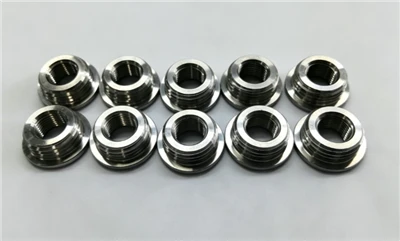
1. Electrical Discharge Machining
Electrical discharge machining is applicable for processing conductive materials, machining small-diameter holes, and deep hole machining. It is one type of non-contact machining method. During electrical discharge machining, the discharge tool and the workpiece are simultaneously connected to the pulsating power supply. The material removal is achieved through the electrochemical corrosion
2. Laser Processing
At present, laser processing is a highly precise and efficient processing method, and is gradually becoming a powerful processing approach in deep and small hole machining. This processing utilizes the high energy generated by the laser beam to melt the material, thereby achieving the processing. Currently, laser processing mainly focuses on research in aspects such as increasing the power of the laser source, optimizing processing parameters, and improving cooling and chip removal.
3. Electrolytic Machining
Electrolytic machining uses an electrolytic reaction to remove materials. An electric current is conducted between the electrode and the workpiece through an electrolyte, and the material of the workpiece is gradually removed in the electrolyte. According to the form of the electrode, it is mainly divided into tube electrode electrolytic machining and electro-hydrojet machining.
4. Other Specialized Processing Methods
Apart from the above three specialized processing methods, there are other methods as well, such as hybrid plasma deep hole machining. Its working principle is to utilize the highly reactive environment of plasma, and achieve efficient and high-precision deep hole processing through a combination of chemical reactions and physical impacts.